
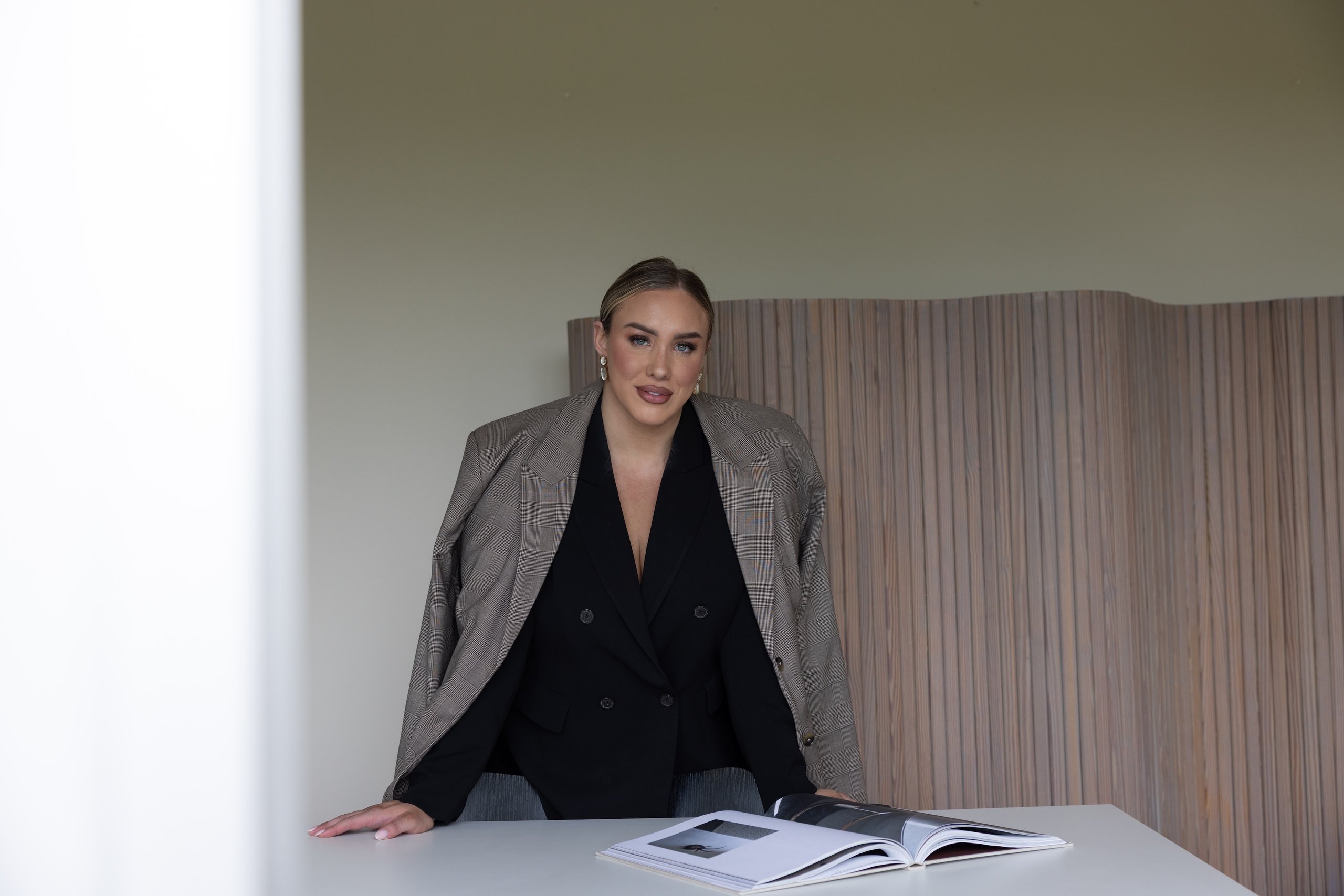
People describe themselves as a “Prada girl” all the time, and that idea is worth understanding, because it's the whole reason luxury brands build worlds instead of just campaigns.
At the end of July, Prada Beauty announced Zendaya as the global ambassador for Prada Paradoxe. With Oscar winning Barry Jenkins directing the campaign. Her husband Tom Holland has been the face of the men's counterpart, Paradigme, since August last year. Prada now has one of the most watched couples on the planet fronting the brand.
On paper that's a very good celebrity deal, and you could read it that way and move on. But something Tayla said when we were picking this edition stuck with me, and it's the reason we ended up writing it.
People say they're a “Prada girl.”
Not just that they own a product from Prada, but that they are a "Prada girl." As though it describes a type of person rather than a brand you buy. And once you notice that, you start noticing how rare it actually is. But Prada is used as shorthand for a kind of human with a certain taste and lifestyle.
They’ve intentionally positioned themselves in the market. Showing what happens when a brand builds a world rather than a look, and it's probably the most valuable and least understood thing in branding right now. So this edition is less a story about Prada and more a proper explanation of how world-building actually works, using Prada as the evidence, because they've been doing it longer and more deliberately than almost anyone.
An aesthetic is what your brand looks like. A world is what your brand believes, who it thinks the customer is, and what kind of life it implies. Anyone can copy an aesthetic, but you can’t copy a world.
Miuccia Prada built the house on an intellectually awkward fashion that resisted mainstream prettiness, also known as “Prada ugly.” Decades later the campaign line for Paradoxe is a woman who is impossible to frame, never the same yet always herself.
Zendaya said she wore Paradoxe long before the brand approached her, and quoted the fragrances as "people choose a reflection of how they move through the world." Prada's president said Zendaya is the embodiment of Paradoxe.
When customers start using your brand name as a word for themselves, you have stopped selling products and started housing an identity. That's what a world is for.
Majority of businesses build a brand by deciding how things should look, rather than creating an identity around their brand. A decision that allows you the power to solidify your beliefs and who your ideal person is, allowing for everything you create to become evidence of it. That's the difference between a brand people notice and a brand people want to evolve around.
The reason Prada can still be doing this forty-odd years later is that the brand was never built on a look. It was built on a unique point of view, one that felt strange for the fashion industry at the time. Miuccia Prada made clothes that were intellectual and subversive, that questioned the idea of prettiness, and that treated the woman wearing them as someone with contradictions rather than someone to be decorated.
Hold that next to the Paradoxe campaign language, which describes a woman who is impossible to frame, never the same yet always herself. The perfume isn't borrowing prestige from the fashion house, it's expressing the same belief in a different category.
This is something most brands skip, and it’s why a lot of branding is feeling interchangeable. If you’re working with the same moodboard as your competitor, things start to look similar, especially when there's no underlying work done to individualise. But if your brand starts with a belief about your customer and about what matters, the visuals become a consequence of it.
An aesthetic is a visual. But an idea tells people what you think, who you think they are, and what you both value. The first can be screenshotted and copied within seconds. The latter takes years to build and can't be stolen, because it isn't sitting on the surface where anyone can reach it.
And here's the practical test, which you can apply to your own brand. If you deleted the visuals of your brand; the logo, colours and fonts. Would anyone still be able to identify you? If the answer is no, you've got an aesthetic. If the answer is yes, you've got the beginnings of a world.
Zendaya’s announcement as the ambassador for Prada Paradoxe on the surface may look like all the other celebrity brand deals, but underneath it’s truly different.
The lazy version of this decision is to look at who's biggest right now and sign them. Reach is easy to measure, and that's exactly why so many brand partnerships feel hollow. They choose someone famous, the post gets views, and nothing about the brand becomes clearer to anyone watching.
Look at how Prada framed it instead. Their global beauty president said Zendaya is the embodiment of Paradoxe, pointing to her authenticity and her evolving energy. The campaign calls her a multi-dimensional muse, the woman impossible to frame. Zendaya's own line was “never the same, always myself.”
Her casting is a demonstration of the idea behind those statements. An actress who’s spent a decade of her career refusing to settle into one fixed image.
When you pick a partner for their reach, you rent their audience for a campaign and give nothing back to your own brand. When you pick a partner because they are living evidence of what you believe, every piece of content they make quietly teaches your audience what you stand for. Same fee, completely different asset.
It's worth saying that worlds have seams, and audiences audit them. Some people online have found the married couple fronting both fragrances a bit on the nose. That's the risk you take when you build a world, because the moment you make a claim about the meaning, your audience is going to fact check you. Which is uncomfortable but also the point.
For most of us this isn't about celebrities at all. It's about who you put on your website,whose testimonial to feature,or who you collaborate with. Every one of those is a casting decision, and each one either builds your world or blurs it.
So we get to the thing Tayla noticed, which is the actual finish line of all this.
“A Prada girl.” People say it about themselves, using the brand as a description of who they are. When people hear it, there's an understanding of what that means even for people who haven’t bought from the brand before. That’s an extraordinary amount of meaning behind a brand,and it took decades of relentless consistency to solidify it.
The mechanism is simple. When a brand holds a consistent idea across the board it eventually detaches from the products and becomes a shorthand. First it's a brand people recognise, then people start to develop opinions. Then it becomes a category of person, meaning you customers are buying into your brand not just the product itself.
You know your world is real when customers start describing themselves with your brand name instead of describing your brand. That's the moment you stop having to explain yourself, because they're doing it for you.
This is also why world-building out performs advertising on pure economics over a long enough horizon. Advertising rents attention and stops the moment you stop paying. A world compounds, because every customer who revolves around it becomes another person talking about your brand for free, forever.
And you don't need Prada's budget for any of this. Erewhon did it with a grocery store. Gymshark did it in a garage in Birmingham. What all of them have in common isn't money, it's that they knew exactly who their person was, used consistent language for years, and made everything they touched feel like it came from the same place.
Write down your idea before you touch the visuals.
Not your mission statement, and not a list of adjectives. One clear belief about your customer and what actually matters. Who are they, what do they refuse to settle for, and what your truth is. Everything visual should be a consequence of that answer, which is also why doing the visuals first is the most common and most expensive mistake in branding.
Apply the delete test.
Strip out your logo, your colours and your fonts. Look at what's left, the words, the offers, the choices, the way you speak to people. Could someone still tell what you stand for? If not, you don't have a world yet, you have a look. That's a fixable problem.
Every feature is a casting decision.
Which client goes at the top of your case studies. Whose testimonial you lead with. Who you collaborate with, interview, platform or repost. Most businesses make these choices based on who's most impressive or most convenient. Choose instead based on who is living proof of what you believe, because your audience learns your world from the company you keep.
Consistency is the whole cost of entry.
Prada has held the same essential idea for four decades. That's the actual price of a world, and it's why most brands never build one, because it requires saying the same thing long after you personally are bored of saying it. If you rebrand every two years you'll never get there, no matter how good each individual rebrand is.
Aim for the self-description.
The goal isn't for people to like your brand. It's for the right people to use your brand as a word for themselves. Ask what kind of person your ideal client would be proud to be seen as, then build everything so that choosing you is evidence of being that person. When they start saying it out loud without you, your marketing has started running itself.
The question this edition leaves you with isn't whether you can afford to build a world, because Prada's budget has almost nothing to do with why this works. It's much simpler and much more confronting than that. If someone described themselves using your brand name tomorrow, what would they be saying about themselves? And if you can't answer that clearly, that's not a design problem, it's the actual work waiting for you.
Get the next edition before it goes live. Subscribe to The Brand Boardroom below.