
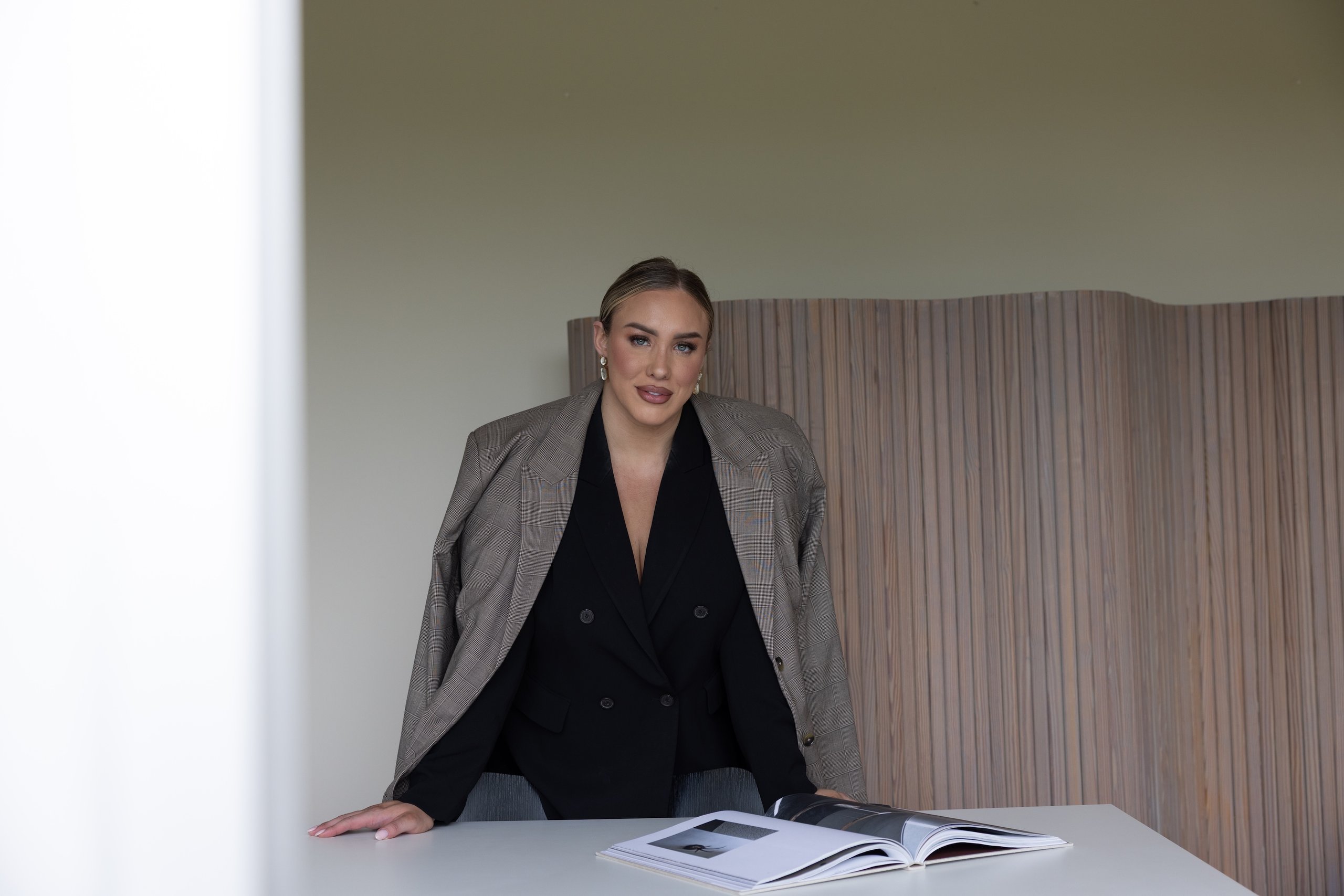
Australia's most famous startup just had the worst year in its history, but how it was handled tells us more about the brand than 13 years of growth ever could.
On 4 November, Melanie Perkins sent an email to everyone at Canva that she'd almost certainly spent 13 years hoping she'd never have to write.
1,271 people, around 22% of the company, would be affected by layoffs, role changes or relocations. It was the first major redundancy round in Canva's history. She called it, without doubt, the hardest moment in the company's 13 years after telling staff that 2026 had been its hardest year yet.
If you run a business in Australia, there's a very good chance you've used Canva this week. It's the company every Australian founder points to as proof it can be done from here. Three founders, a big idea about making design accessible to everyone, more than a hundred investor rejections in the early days, and then one of the greatest growth stories of the last decade.
Most of the coverage has gone one of two ways. Either it's been lumped in with the wave of tech layoffs this year, or it's focused on how generous the exit package was. However, I think they both miss the brand story underneath it, which is one of the more useful lessons available to anyone who's grown a business past the point where it still feels small.
The number of people affected by the restructure, around 22% of Canva's workforce. It's the first major redundancy round in the company's thirteen-year history.
Canva's annualised revenue near the end of October (about AU$5.3 billion), according to confidential data reported by the Australian Financial Review. That's reportedly around the same run-rate as the start of the year, well short of a US$5.2 billion goal.
The reported fall in monthly active users compared with the same time last year, per the same AFR report. Canva hasn't confirmed either figure publicly.
The minimum salary in the exit package, alongside a year of healthcare where Canva provides it, the equity vesting cliff removed for recent starters, and a US$10,000 grant (about AU$14,300) for anyone who wants to start their own business.
Something to keep in mind as you read through the below. When growth stalls, almost every business reaches for something visible: a campaign, a rebrand, a big product launch, but Canva had already done its big launch earlier in the year, so it had to pivot.
Back in April, Canva launched Canva AI 2.0. Perkins called it the platform's biggest launch ever and the most significant moment in Canva's history, about as big a visible move as a company can make.
Yet, by the end of October, according to the AFR's reporting, revenue was sitting at roughly the same run-rate it had been at the start of the year.
So their next move couldn’t be tactical, it had to be structural. Canva is merging its product, growth and platform teams into a single product organisation, removing management layers, and making Sydney its primary base. In Perkins' words, the company is simplifying layers, consolidating overlapping responsibilities, and making sure teams have the right mix of skills for the chapter ahead.
A couple of editions ago I wrote about Gucci, and how the instinct when something isn't working is to change the most visible thing, because it feels decisive and everyone can see you doing it. What Canva did is close to the opposite. They had already pulled the visible lever, the biggest launch in its history, and when the number didn't move, they were forced to look at the machinery underneath.
A big launch is a story you tell the market. A restructure is a story you tell yourself. When the most significant moment in your history doesn't change the trajectory, the problem probably isn't the product announcement. It's how the business is built to deliver everything after it.
Is it the right fix? Honestly, it's too early to know, and anyone telling you otherwise is guessing. But the diagnosis is the bit worth paying attention to, because it's the one most businesses never make.
This is the part I think almost every founder reading this will recognise.
Perkins described the restructure as a chance to refound the company, to get back to its roots of small, empowered teams with the freedom to make decisions and take ownership. The line that stuck with me most was this one: we want to get back to spending more time building and less time navigating how work gets done.
That’s a confession most companies would never put in writing. Somewhere between 3 founders in 2013 and a global business with thousands of staff, Canva had built enough structure around itself that the people doing the work were spending too much of their time working out how to get the work done.
Nobody decides to do that. It just happens. Every new hire needs a manager. Every new product needs a team. Every new team needs a process to coordinate with the other teams. Each addition makes complete sense on the day you make it, and a few years later you've got a business that's bigger, slower and further from the customer than the one you started.
Layers are the tax you pay for growth, just without an immediate invoice. You only find out what they've cost you when growth stops and you look up to discover that the thing that made you fast has quietly disappeared.
This also isn't just a tech-giant problem. I see it constantly with founders between 6 and 9-figures. The business that won on speed and closeness to the customer at 10 people becomes, at 50, a business where the founder can't remember the last time they spoke to a client and every decision needs three meetings. Nothing went wrong, it just got heavier.
Canva's answer was subtraction: fewer layers, merged teams, clearer ownership. It's painful, and in this case it came at a real human cost. But the instinct to go back to what made you good, rather than add yet another thing on top, was the right decision.
Now to the bit that I’ve been incredibly impressed with.
The package Canva offered the people leaving is unusual. At least 6 months' salary. A year of continued healthcare in the countries where Canva provides it. The one-year equity vesting cliff removed for anyone who'd joined in the past year, so they don't walk away with nothing. Career coaching, interview prep, a year of LinkedIn Premium, an alumni talent directory shared with potential employers. Oh, and they also get to keep their laptops. And anyone who wants to start their own business gets a US$10,000 grant (about AU$14,300) to do so.
The response was remarkable for a layoff. One outlet called it a masterclass in how to handle layoffs, as it’s very rare for a company to lose a fifth of its people and come out of the week with its reputation broadly intact.
Here's why I think that's a powerful brand story. Canva's brand has always been built on values. Empowering the world to design. Be a good human. The founder story of a young woman in Perth getting knocked back over, and over, and over again, and refusing to give up. That kind of brand is easy to hold when you're growing fast and hiring, but it really only gets tested when things go wrong.
Values are free when you're winning. The only time anyone finds out whether a brand meant what it said is in the year it can't afford to. Canva just ran the most important brand campaign of its life, and it was the email to staff and a redundancy package.
And there's a strategic layer to it too, which sits comfortably alongside the kindness. 1,271 people are going to talk about Canva for the rest of their careers. An alumni directory, a startup grant, a laptop they get to keep. Those are the details that decide whether someone tells the story of how Canva let them go with bitterness or with respect. A brand isn't only what your customers think of you, it’s also what everyone who's ever worked for you says when your name comes up.
It doesn't make losing your job any easier, but it does show a company that understood exactly what was at stake.
The announcement didn't mention AI, which some coverage pointed out. But it's hard to ignore the timing. Canva built its entire business on making design accessible to people who aren't designers, and now that promise is now being chased by tools that can produce a design from a single sentence, including Canva's own. Whether that's part of why growth has stalled, nobody outside the company really knows. It's the question hanging over the story, and may not ever be answered.
It's also worth remembering that the revenue and user numbers come from confidential data reported by the AFR, not from Canva itself, and that the company's IPO is now reportedly targeted for 2027. This is a business in a hard year, not a business in trouble (which are very different things).
When growth stalls, check the structure before the story.
The instinct is always to launch something, rebrand something or run a bigger campaign. Sometimes that's right. But if you've already made a big visible move and the number hasn't shifted, the problem probably isn't how you're telling the story, it’s likely how the business is built underneath it.
Layers are the tax you pay for growth.
Every person, process and meeting you add makes sense on the day you add it. Every so often, look at how your business actually runs and ask what you'd keep if you were building it from scratch today.
Your brand is how you behave in your worst year.
Anyone can rattle off how values lead in a growth year. The proof comes when something goes wrong and you have to decide how to treat people when it would be cheaper not to. That moment will define your brand far more than any campaign.
The people who leave are still part of your brand.
Every former employee, contractor and client carries a version of your brand with them. How you end a relationship matters as much as how you start one, and it's remembered for a lot longer.
Don't confuse a big launch with a fix.
Canva's biggest launch ever didn't change the trajectory. Launches create attention, but attention isn't the same as conversion and growth, so if you’re relying on the next big moment to solve a problem, it might be time to look somewhere less visible.
The question this edition leaves you with is a simple one. If you stripped your business back to how it worked when it was small and fast, what would you get back? And how many of the layers you've added since were ever actually asked for? You don't need a hard year to go and find out, and in fact, it's much easier if you don't wait for one.
Get the next edition before it goes live. Subscribe to The Brand Boardroom below.