
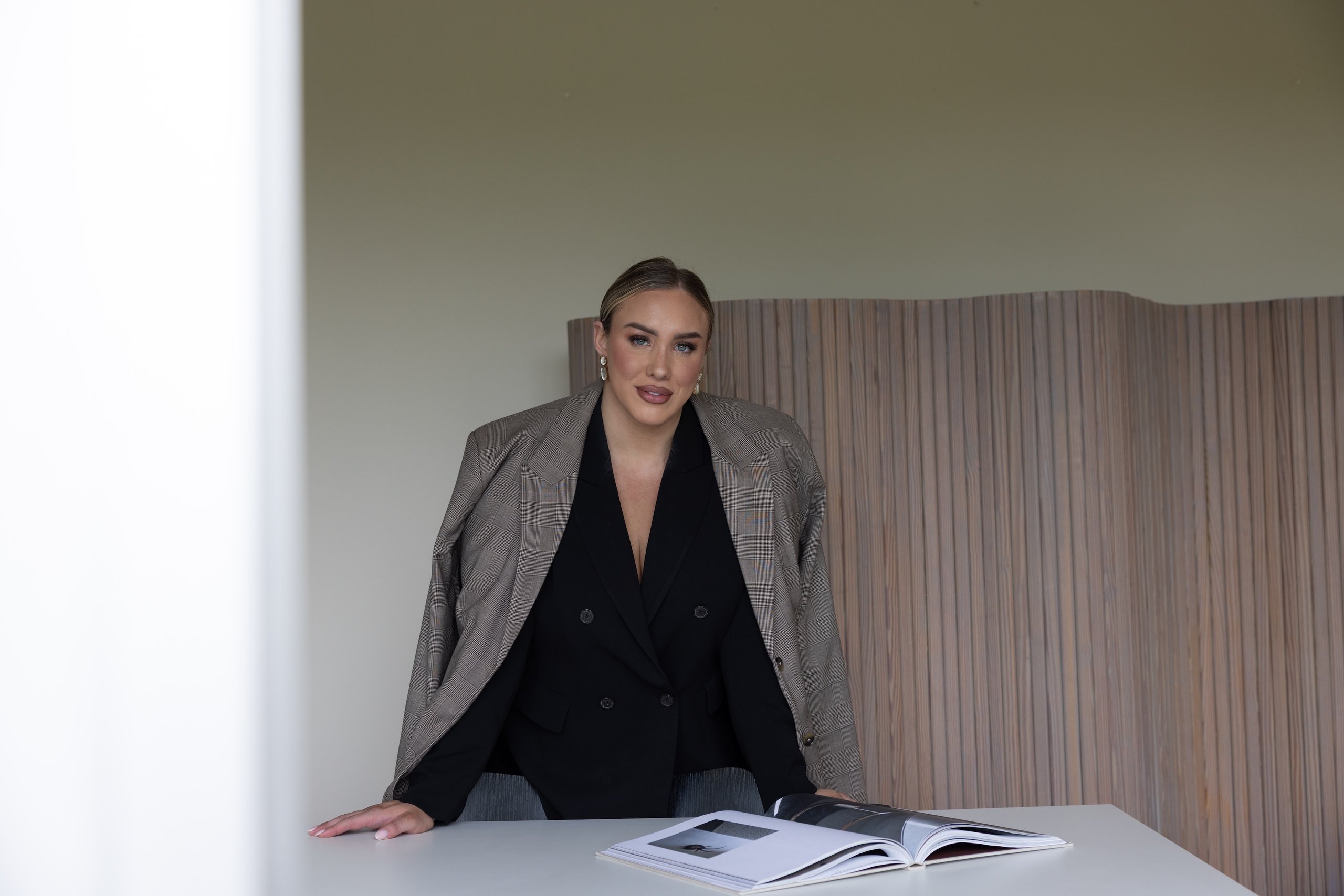
Everyone tells this story as an influencer who used her following to launch a brand. But the part nobody talks about is what she did next, which was quietly spend years making sure the brand didn't need her at all.
In 2019 a 22-year-old was finishing her degree at Oxford and launched an activewear brand on the side with, and I'm not exaggerating here, no marketing budget whatsoever. In its first year, the brand did over five million pounds (about nine and a half million Australian dollars).
She likely needs no introduction, but her name’s Grace Beverley, formerly known online as GraceFit with over a million followers in the fitness space. When TALA launched and immediately took off, everyone had the same reaction: of course it worked, she's got an audience. Influencer sells thing to her followers, influencer makes money, we've all watched that happen a hundred times and it usually deserves the eye roll it gets.
Except that's not the story here.
About two years in, right when leaning harder into her own name would have been the easiest and most profitable thing to do, she went the other way. TALA had originally launched through a manufacturer that specialised in influencer brands, that whole world of quick celebrity labels. And in 2021 she cut them off completely. The reasoning was that she basically didn't want to run an influencer brand. She wanted to run a brand.
A CEO came in to run the company and the marketing moved away from her face and towards the brand's own thing. Physical stores opened. ASOS and Selfridges started stocking it. And by the year ending March 2025 TALA was turning over £19.8 million ($~40 million AUD), with Grace still very much the founder and still the most famous person attached to it, but the business no longer really hanging on whether (or not) she posts.
Zero
What TALA spent on marketing in its first year. All of the early growth came from organic social and the community Grace already had, and it still did over £5 million in sales.
2021
The year she walked away from the influencer-brand manufacturer TALA had launched through, specifically to get the business off a model that depended on her personal profile.
£423,000
What one collection made in its first two hours. An earlier outerwear drop did £270,000 in a single hour. That's a community showing up for the brand, not just people clicking a founder's link.
£19.8M
Revenue for the year ending 31 March 2025, up 19%, with two London stores now open and stockists including ASOS and Selfridges.
The one thing I think is worthy to note here: A personal brand is genuinely the fastest launchpad there is, but it’s also the shakiest foundation you can build a company on, because the whole thing rests on one person continuing to show up, stay relevant and (stay interested) for as long as the business needs to exist. Almost nobody who launches off their own audience ever actually solves this problem. Grace did.
The reason TALA exists is pretty simple, and it came from Grace doing the job. She'd worked with activewear brands as a creator, so she knew the category from the inside out. Then she started caring about where her clothes came from, went looking for sustainable activewear, and found the market had basically split into two camps with nothing in the middle.
On one side, fast fashion. Cheap, everywhere and produced in ways she couldn't really defend. On the other side, genuinely sustainable brands that were also priced like luxury goods. Her line on it was that a hundred pounds ($200 AUD) for a pair of leggings just isn't possible for most people, and that sustainability had quietly turned into a thing brands could charge a premium for rather than something normal people could actually buy.
So, she built TALA to fill that gap. Sustainable materials, prices that competed with the mainstream, aimed at everyone in the middle who'd been ignored.
And the bit that makes me love this story even more is genuinely uncomfortable if you're a purist about any of it. Grace has talked about how by making the activewear around 2% less sustainable in terms of materials, they could halve the price. Two percent. Half the price. Most brands in that space would rather protect their perfect standard and serve a tiny group of people who can afford it than give up 2% and reach everyone.
Purity is a really comfortable place to hide. You get to feel principled while quietly serving almost nobody. The braver commercial call is usually the slightly imperfect one that actually reaches people, because a compromised product in a hundred thousand wardrobes does more good, and more business, than a flawless one sitting behind a price nobody can pay.
That one decision is basically why TALA scaled. The market didn't need another beautifully principled label for people with money, it needed something a 22-year-old could actually afford, and Grace was willing to give up 2% to make it happen.
This is the part that separates her from every other creator brand, and honestly the part I think most founders need to hear.
The launch itself was textbook. A million people who already trusted her on this exact subject, nothing spent on marketing and $10 million AUD in the first year. When you've got that kind of relationship with an audience and you put something in front of them they actually want, those first 18 months can feel almost too easy.
And that's exactly where it gets dangerous, because success like that makes leaning in harder feel like the obvious move. Put yourself in more of the content. Post more. Let the brand become an extension of you, since that's clearly what's working. And it does keep working, right up until you're exhausted, or your audience drifts, or you simply want to do something else with your life, and then the whole thing wobbles because it never developed a reason to exist without you in front of it.
Grace clocked that early and cut out the influencer-dependent manufacturing model in 2021. Brought in a CEO to actually run the company. Moved the marketing towards TALA's own identity, its own community, its own language, rather than hers.
Your personal brand is the best launchpad in business and the worst foundation. It buys you attention money can't, and at the same time it quietly holds the company hostage to your energy, your relevance and your willingness to keep performing. The founders who build something that lasts are the ones who start handing that trust over to the brand while things are still going well.
I do want to be fair about the trade-off though, because there absolutely is one. Leaning on a founder's face is cheaper and faster in the short term, no question. Building equity that stands on its own costs real money and takes years. TALA's most recent accounts show an operating loss of £1.9 million against that £19.8 million in revenue, because they're pouring money into stores and wholesale and infrastructure. That's a deliberate decision to spend now on foundations a personality-led brand never has to build, and there's genuine risk sitting in it.
But it's the same decision every founder ends up facing eventually, just with more zeros. Do you want a business that runs only dependent on you, or a business that runs without you?
This is the mechanic I'd actually steal if it were me, and it's the thing people miss when they talk about TALA having a cult following.
A creator's community belongs to the creator. Those people are there for her specifically, and if she goes quiet for a few months they drift off somewhere else. A brand's community works completely differently. It's got its own rituals and its own membership and its own reasons to turn up that have nothing to do with any one person.
TALA very deliberately built the second kind. There's a membership called TALA Insiders that gets you early access to collections and a discount for signing up. Launches run as timed drops, so buying something becomes an event you have to show up for rather than a transaction you get around to. Collections get their own names and their own little followings. So when a launch does £423,000 in two hours, that's not a founder converting her audience. That's a brand's community turning up for something they've been waiting weeks for.
There's a real difference between an audience and a community. An audience watches one person and leaves when that person does. A community shows up for the thing itself, for the drop, for the membership, for the other people in it. If your customers would still be there if you vanished for six months, you've built a community. If they wouldn't, you've built an audience, and you're the only thing holding it up.
And the reason it holds is that all those mechanics belong to the company. The Insiders list is TALA's. The drop calendar is TALA's. The collections, the anticipation, the language, all of it sits with the brand rather than on a personal account that could get buried by an algorithm tomorrow morning.
Grace is still the founder and still the most recognisable face attached to any of it, and she's still an enormous asset. None of that's changed. What's changed is that she's not the load-bearing wall anymore.
Look for the gap between the extremes.
TALA exists because she noticed the market had split into cheap and unethical at one end and ethical and unaffordable at the other, with a big empty space in between. Most categories have a version of this. Have a look at where your industry has polarised and ask who's getting left out in the middle, because that's usually where the biggest and least crowded opportunity is quietly sitting.
Perfect is often the enemy of accessible.
Giving up two percent of an ideal to halve your price is the kind of call purists hate and businesses get built on. If holding your standard at a hundred percent means only a tiny group can ever afford you, it's worth asking honestly whether that standard is serving your mission or just protecting your ego. Sometimes the more generous option is the slightly compromised one that actually reaches people.
Your personal brand is a launchpad, not a business model.
Use it, obviously. It's the fastest way to get something off the ground and it costs you nothing. But build it assuming you eventually want the thing to stand without you, because otherwise you've created a company that can never grow beyond your own capacity to promote it. The launch can depend on you. The business shouldn't.
Build community mechanics the brand owns.
Memberships, drops, waitlists, rituals, named collections, all of it. These belong to the business and they keep working whether or not you posted this week. Worth asking what reason your customers have to show up that's got nothing to do with you personally, and if you can't think of one, that's the gap to start closing.
Start the handover while things are going well.
She moved TALA off the influencer model in year two, when leaning in harder would have been easier and made more money. That timing is the whole lesson. The moment to start shifting trust from you onto the brand is while the business is healthy and you've still got the energy to do it properly, not when you're burnt out and have no choice.
The question this leaves you with isn't whether to use your personal brand, because of course you should, it's the most valuable unfair advantage most of us will ever have. It's the quieter and much more annoying one: if you stopped showing up for six months, would the business still be standing? And if the honest answer is no, what would you need to start building today so that one day it would be?
Get the next edition before it goes live. Subscribe to The Brand Boardroom below.